

Most homeowners assume that if nothing looks broken, nothing is wrong. But some of the most expensive problems in a house develop quietly inside walls, ceilings, and slabs long before there’s any visible sign of trouble. By the time you notice a stain, a smell, or a spike in your utility bill, the damage may have been building for months or even years. Understanding what these hidden failures look like and how to catch them early can save you thousands of dollars and protect your home’s structure for decades to come.
- Aging Roof Decking and Hidden Moisture Damage
- Failing Ductwork and Uneven Airflow Throughout the House
- Struggling Compressors and Refrigerant Leaks
- Hidden Slab Leaks Beneath Concrete Foundations
- Deteriorating Garage Door Springs and Openers
- Water Heater Corrosion and Silent Tank Failures
- Outdated Window Seals and Hidden Energy Loss
- Structural Settling and Framing Issues Behind Drywall
Aging Roof Decking and Hidden Moisture Damage
A roof can look perfectly fine from the ground while the decking underneath is quietly rotting away. Small leaks around flashing, vents, chimneys, or nail penetrations often go unnoticed because water travels sideways along rafters before it ever shows up as a ceiling stain. By the time you see discoloration indoors, the wood sheathing may already be compromised. This lag between the initial leak and any visible sign can stretch on for months or even years, especially in attics that aren’t regularly inspected.

Plywood or OSB decking absorbs moisture slowly, swelling and softening long before it visibly sags or delaminates. In many cases, the first real clue isn’t a stain at all — it’s a musty smell in the attic, granules collecting in the gutters, or a slight give underfoot when someone walks the roofline during maintenance. Certain trouble spots deserve extra attention because they’re where most hidden leaks originate. Roof valleys, skylight edges, and areas around plumbing stacks see repeated water exposure and are prone to failed sealant or cracked flashing.
Ice dams in colder climates make this worse, forcing meltwater backward under shingles and into the decking rather than letting it drain off the edge as designed. Left unaddressed, this kind of moisture intrusion doesn’t just weaken the wood — it invites mold growth and can eventually rot rafters or trusses, turning a relatively cheap flashing repair into a full structural rebuild. A professional roof inspection every one to two years, particularly after major storms, is one of the few ways to catch this damage while it’s still limited to a small section of decking rather than the entire roof system.
Roof decking rarely fails all at once. It’s usually a slow process that starts with a small leak point—a cracked flashing seal, a lifted shingle edge, or a clogged gutter that lets water back up under the roofline. Once moisture reaches the plywood or OSB decking, it can spread laterally for feet in every direction, rotting wood and feeding mold colonies long before any stain appears on your ceiling below.
Scheduling professional roofing repair at the first sign of granule loss, curling shingles, or soft spots can prevent a much larger structural issue later. A roofing contractor can also check attic ventilation while they’re up there, since poor airflow traps humidity against the underside of the decking and accelerates rot even when the roof surface looks fine. Catching these problems early typically costs a few hundred dollars in repairs versus tens of thousands for a full decking replacement.
Many insurers now also recognize the value of the fortified roofing program, which sets stricter standards for materials and installation methods designed to withstand high winds and severe weather. These standards typically call for sealed roof decks, reinforced roof-to-wall connections, and impact-resistant shingles rated for higher wind speeds. Homes built or retrofitted to this standard often see lower insurance premiums, sometimes in the range of 10 to 30 percent depending on the insurer and region, along with fewer storm-related claims over the life of the roof.
- Check attic insulation for dark streaks, matting, or dampness after heavy rain, especially near roof valleys and chimneys where leaks tend to start
- Look for daylight through the roof deck when in the attic, and use a flashlight at dusk to spot pinhole gaps you might otherwise miss
- Press on visible decking or rafters with a screwdriver; soft, spongy wood signals rot even if it looks fine from below
- Note any granules collecting in gutters, which signal shingle breakdown, particularly on roofs older than 15 years
- Watch for sagging rooflines or a wavy appearance between rafters, which often means the decking has already lost structural integrity
- Ask a roofing contractor about fortified certification during your next inspection, and request moisture readings on the decking itself, not just a visual check

Failing Ductwork and Uneven Airflow Throughout the House
Ductwork hidden inside walls and ceilings can develop leaks, disconnections, or crushed sections that quietly waste energy every single day. You might notice one room that’s always too warm or too cold, or a system that runs constantly without ever quite catching up. These are classic signs that conditioned air is escaping before it reaches its destination.
A professional heating air conditioning inspection can reveal duct leakage using pressure testing equipment that isn’t available to the average homeowner. Sealing and insulating ductwork often delivers a bigger comfort improvement than replacing the equipment itself. Left unaddressed, this hidden inefficiency can add hundreds of dollars a year to utility bills.
- Feel for weak airflow at vents farthest from the unit
- Listen for whistling or hissing sounds near duct joints
- Watch for dust streaks around vent covers, which indicate air leakage
- Compare energy bills month to month for unexplained spikes
Struggling Compressors and Refrigerant Leaks
An air conditioner that runs longer than it used to, or cycles on and off rapidly, may be masking a refrigerant leak that’s been developing for a while. These leaks often occur in coils or line sets hidden behind walls or under the home, making them difficult to spot without specialized tools. Ignoring the problem doesn’t just hurt comfort, it can eventually burn out the compressor entirely.
Reputable AC repair companies use leak detection dyes and electronic sensors to pinpoint the exact source before recommending a fix. Catching a slow leak early is far cheaper than replacing a compressor that has failed from running low on refrigerant for too long. Annual maintenance visits are one of the simplest ways to catch this kind of silent failure before a heat wave puts your system to the test.
- Watch for ice buildup on refrigerant lines or the outdoor unit
- Note any hissing or bubbling sounds near the condenser
- Track rising humidity indoors, a sign the system isn’t dehumidifying properly
- Schedule seasonal tune-ups before peak cooling months
Hidden Slab Leaks Beneath Concrete Foundations
Water lines that run beneath a concrete slab can corrode or shift over time, leaking directly into the ground without any obvious exterior sign. Homeowners often first notice a warm spot on the floor, an unexplained increase in their water bill, or the sound of running water when every fixture is off. Left alone, a slab leak can undermine the foundation itself and lead to far more expensive repairs.
Specialized slab leak detection uses acoustic listening devices and thermal imaging to locate the exact point of failure without tearing up the entire floor. This targeted approach saves both time and money compared to guesswork. If you suspect a slab leak, it’s worth acting quickly, since standing water under a foundation can attract mold and termites in addition to weakening the structure.
- Check for warm patches on flooring, especially over slab areas
- Monitor your water meter overnight for movement when nothing is running
- Watch for cracks in the foundation or nearby walls
- Listen for a faint hissing sound near the floor in quiet rooms

Deteriorating Garage Door Springs and Openers
Garage doors take on constant mechanical stress, and the springs, cables, and rollers inside the mechanism wear down gradually without much outward warning. A door that seems to struggle, sags on one side, or makes a grinding noise is often further along in its decline than it appears. Because a garage door is one of the heaviest moving objects in a home, a sudden failure can be dangerous as well as costly.
Professionals who specialize in garage door installations recommend annual inspections of the springs, cables, and safety sensors, since these components are under constant tension even when the door looks fine at rest. Replacing worn parts before they snap is far safer and cheaper than an emergency repair after a failure. A well-maintained door also plays a role in your home’s insulation and security, so it’s not purely a mechanical concern.
- Listen for grinding, popping, or scraping sounds during operation
- Check for uneven movement or a door that closes crookedly
- Test the auto-reverse safety feature regularly
- Inspect cables and springs for visible rust or fraying
Water Heater Corrosion and Silent Tank Failures
Water heaters often fail from the inside out, with sediment buildup and internal corrosion slowly weakening the tank long before a visible leak appears. A unit that takes longer to heat water, makes rumbling noises, or produces slightly discolored water is usually signaling trouble beneath the surface. Since most tanks are tucked away in a closet, garage, or basement, early symptoms are easy to miss.
A timely water heater repair can often extend the life of a unit by several years if the anode rod or heating element is addressed before full corrosion sets in. Flushing sediment annually is one of the simplest maintenance tasks homeowners can do themselves to slow this process down. Once a tank starts rusting through the outer shell, replacement rather than repair is usually the safer choice.
- Listen for popping or rumbling sounds during heating cycles
- Check the area around the tank for dampness or rust stains
- Test the temperature and pressure relief valve annually
- Flush sediment from the tank at least once a year
Outdated Window Seals and Hidden Energy Loss
Windows that look intact can still be losing energy through failed seals, degraded weatherstripping, or warped frames that no longer close tightly. Condensation forming between double-pane glass is a clear sign the seal has broken, allowing moisture and air to pass through invisibly. This kind of gradual failure drives up heating and cooling costs without any dramatic warning sign.
Beyond the window unit itself, well-chosen window treatments can help buffer some of this energy loss by adding an extra layer of insulation against drafts. Cellular shades and lined curtains in particular can noticeably reduce heat transfer during both winter and summer months. While treatments won’t fix a broken seal, they’re a practical stopgap while you plan for repair or replacement.
- Check for fogging or condensation between panes of double glazed windows
- Feel for drafts along the frame on windy days
- Inspect caulking and weatherstripping for gaps or cracking
- Consider insulating shades or curtains as a temporary energy buffer
Structural Settling and Framing Issues Behind Drywall
Homes naturally shift over time, but excessive settling can create hidden stress on framing, load-bearing walls, and door frames that isn’t always obvious from casual observation. A certain amount of movement is normal, especially in the first few years after construction as soil compacts and lumber cures, but ongoing or uneven settling is a different problem entirely.
When one corner of a house sinks faster than the rest, the framing above it gets pulled out of square, and that distortion travels through the walls and ceilings long before it becomes visible. Cracks that reappear after patching, doors that stick in certain seasons, or gaps forming between trim and walls can all point to movement happening inside the structure. Diagonal cracks radiating from the corners of windows and doors are particularly telling, since they usually mean the frame itself is racking rather than the drywall simply aging. Seasonal sticking is another clue worth tracking: if a door only jams in summer humidity, it may just be wood swelling, but if it worsens year over year regardless of weather, the frame is likely shifting.
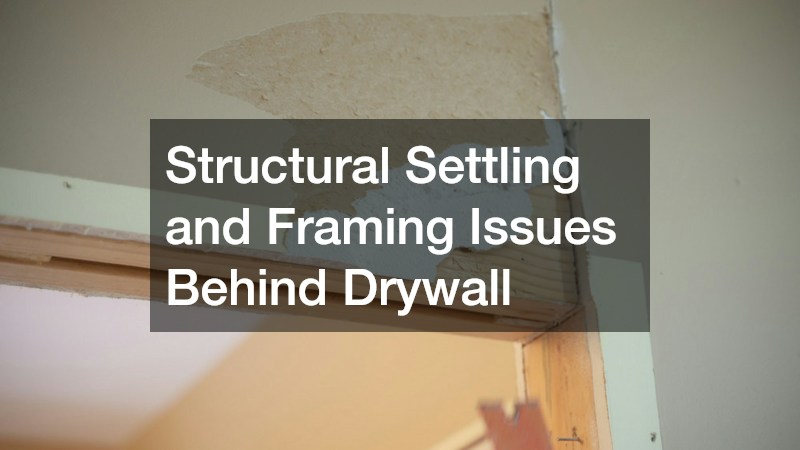
These signs are easy to dismiss individually but tell a bigger story when they appear together. A single crack might mean nothing, but a crack paired with a sloping floor, a door that no longer latches, and a widening gap along the baseboard suggests the structure is actively moving. Homeowners can do a rough check with a level or a marble on the floor to see if slopes exceed a noticeable pitch, but any suspected differential settling greater than an inch across a room’s span is worth having assessed by a structural engineer or foundation specialist before cosmetic repairs are attempted.
Cracks that appear at a 45-degree angle from door and window corners, doors that stick during humid months, or gaps forming between crown molding and ceiling are all signs worth documenting. Take photos every few months and note whether the cracks are widening or staying the same size, since progression matters more than the crack itself. A quarter-inch gap that hasn’t moved in a year is very different from a hairline crack that’s grown noticeably in a few weeks.
For significant structural concerns, it’s worth bringing in a licensed commercial general contractor or residential structural specialist who can assess whether the issue is cosmetic or load-bearing. A proper evaluation may include checking the crawlspace or basement for cracked piers, sistered joists that have separated, or moisture damage around support beams.
Some specialists will also recommend soil testing around the foundation, especially in areas with expansive clay or a history of drought followed by heavy rain. Larger renovation projects often uncover these hidden issues once walls are opened up, which is one reason working with experienced home remodeling companies matters when planning any major update. A contractor who has handled older housing stock will know to check for balloon framing, undersized headers, or load paths that were altered by a previous owner without permits.
That kind of experience can prevent a simple kitchen update from turning into an unplanned structural repair. Addressing structural movement early is almost always cheaper than waiting until it affects the roofline or foundation. Minor shimming or crack repair might run a few hundred dollars, while foundation underpinning or beam replacement can climb into the tens of thousands. Catching the problem while it’s still cosmetic gives homeowners far more control over both the timeline and the budget.
- Track cracks over time by dating and photographing them; cracks wider than 1/8 inch or growing month to month signal active movement, not old settling
- Check door and window frames for square alignment using a level; doors that stick, swing open on their own, or leave a diagonal gap at the top are red flags
- Look for gaps between baseboards and flooring, especially where they widen more on one side of a room than the other
- Note diagonal cracks radiating from door and window corners, since these often reveal shifting more clearly than vertical wall cracks
- Check for uneven floors with a marble test or level, as sloping over 1 inch per 20 feet can indicate foundation trouble
- Bring in a structural professional if multiple signs appear together, particularly cracks, sticking doors, and sloped floors occurring in the same area
Silent home failures rarely announce themselves loudly until the damage has already become expensive to fix. Regular inspections, a bit of homeowner curiosity, and prompt attention to small warning signs are the most reliable defense against costly surprises down the road. Rather than waiting for a visible crisis, take a proactive walk through your home this week and check the systems outlined above. The sooner a hidden issue is found, the more options and the more savings you’ll have in addressing it.